Red Light Therapy vs PEMF Therapy for Horses: What's the Difference?
When it comes to supporting your horse's comfort, wellness and recovery, two technologies are becoming increasingly popular among horse owners, equine therapists and rehabilitation professionals: red light therapy and Pulsed Electromagnetic Field (PEMF) therapy.
Both offer non-invasive approaches to equine wellness, but they work in very different ways.
Red light therapy uses specific wavelengths of light to interact with biological tissues, while PEMF therapy uses changing electromagnetic fields to influence physiological processes.
At SV Equestrian, we offer both wireless LED red light therapy pads and Centropix electromagnetic field technology, allowing horse owners to explore different approaches based on their individual needs.
But which is better for your horse? Let's explore the differences.
What Is Red Light Therapy for Horses?
Red light therapy, also known as photobiomodulation (PBM), uses specific wavelengths of red and near-infrared light to interact with cells and tissues.
Our SV Equestrian LED therapy pads combine two commonly used wavelengths:
-
660 nm red light: Commonly investigated for applications involving skin and more superficial tissues.
-
850 nm near-infrared light: Used in photobiomodulation applications involving tissues beneath the skin, although actual penetration depends on tissue characteristics and device output.
Photobiomodulation is being studied for its potential influence on cellular signaling, inflammation and tissue repair.
Why Choose LED Red Light Therapy?
One of the biggest advantages of LED therapy pads is their convenience.
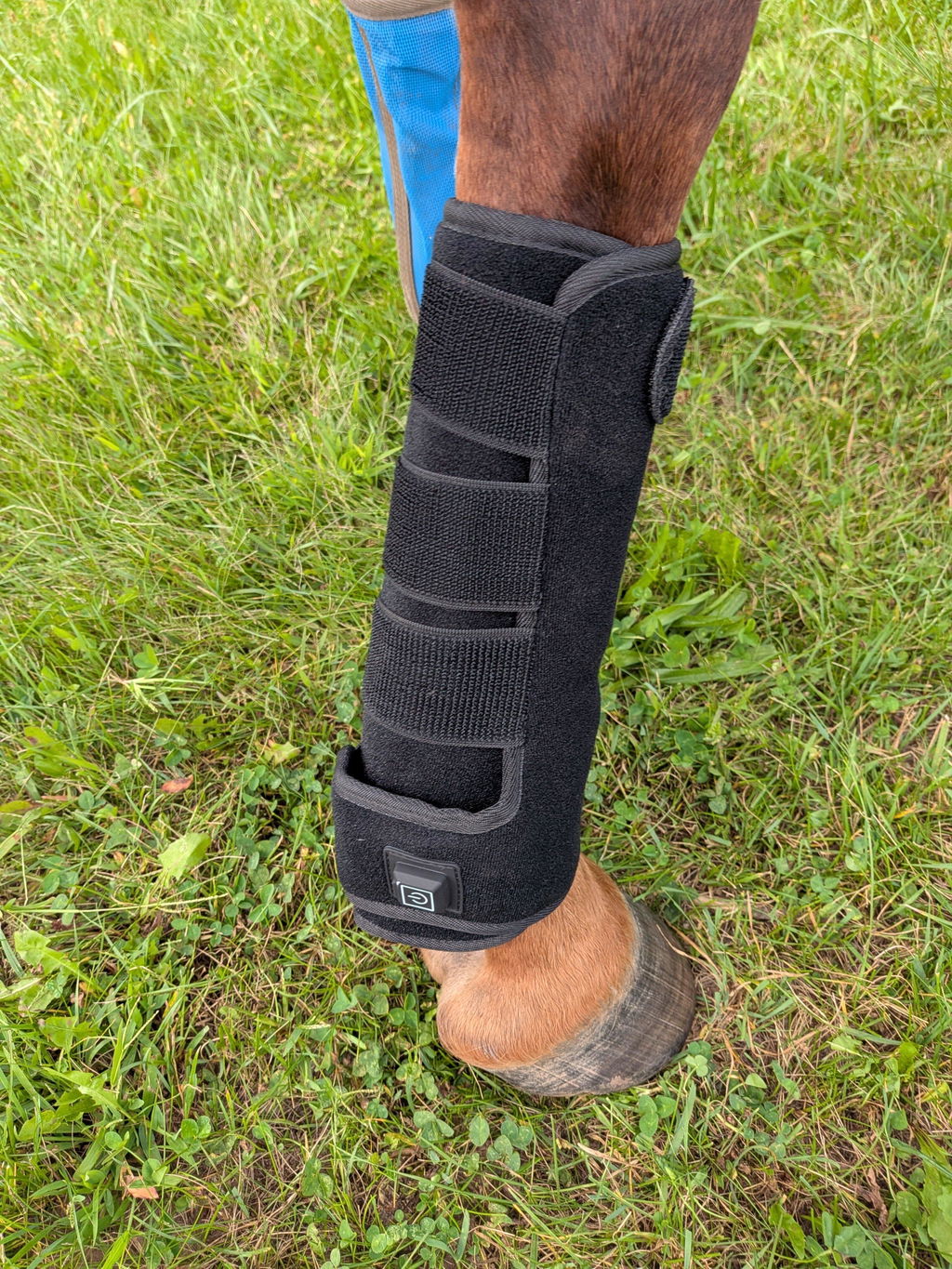
SV Equestrian's wireless LED pads are designed to be positioned over different areas of the horse, making them practical for everyday wellness routines.
Depending on the pad selected, applications may include:
-
Back and neck
-
Shoulders and hindquarters
-
Hocks and knees
-
Lower limbs
-
Poll and other accessible areas
Their flexible design allows horse owners to incorporate light therapy into regular care routines without needing to hold a handheld device throughout the session.
Explore our SV Equestrian LED therapy pads: https://sv-equestrian.com/collections/sv-equine-therapy-led-light-therapy-pads
What Is PEMF Therapy for Horses?
PEMF stands for Pulsed Electromagnetic Field therapy.
Rather than delivering light, PEMF devices generate changing electromagnetic fields using electrical coils.
These fields can interact with biological tissues through mechanisms that differ from photobiomodulation.
PEMF has been investigated in veterinary medicine for applications involving musculoskeletal health, inflammation and rehabilitation.
However, clinical outcomes depend on the device, electromagnetic field characteristics, treatment parameters and condition being investigated.
Introducing Centropix Electromagnetic Field Technology
At SV Equestrian, we also offer access to Centropix KLOUD technology, including the KLOUD Vet-Set designed for equine use.
Centropix describes its technology as PEMA (Pulsed Electromagnetic Activation), a branded electromagnetic field approach.
The KLOUD Vet-Set incorporates a portable mat into a horse blanket, providing an alternative to conventional localized therapy pads.
Its design offers several practical features:
-
Broad-area application using a horse blanket
-
Adjustable operating settings
-
Portable equipment suitable for barn use
-
A removable mat that can also be used separately
-
An alternative electromagnetic approach to equine wellness
It's important to distinguish the technology's design features from clinical outcomes. Research involving other PEMF devices does not automatically establish the effectiveness of a particular Centropix product.
Discover Centropix at SV Equestrian: https://sv-equestrian.com/pages/centropix
Red Light Therapy vs PEMF Therapy: Key Differences
| Feature | LED Red Light Therapy | PEMF / Centropix |
|---|---|---|
| Technology | Red and near-infrared light | Changing electromagnetic fields |
| Delivery | LED therapy pads | Electromagnetic coils within a device or mat |
| Typical application | Specific body areas | Localized or broad-area coverage, depending on equipment |
| Contact | Pads positioned on the horse | Device-specific positioning |
| Main research focus | Photobiomodulation and cellular responses | Electromagnetic effects on biological processes |
| Equipment | Wireless LED pads | Centropix KLOUD mat and Vet-Set |
| Treatment settings | Device-specific light settings and duration | Device-specific electromagnetic settings and duration |
Both technologies have different operating characteristics, and neither can be considered universally superior.
Which Therapy Is Better for Muscle Recovery?
Horse owners frequently explore complementary technologies following training, competition or periods of increased physical activity.
Photobiomodulation research investigates how light exposure may influence cellular processes associated with muscle function and recovery.
PEMF research explores how electromagnetic fields may affect physiological processes relevant to musculoskeletal health.
However, evidence demonstrating meaningful improvements in equine muscle recovery remains limited, and direct comparisons between the two technologies are lacking.
When Might LED Therapy Be More Convenient?
An LED pad may be a practical option when you want to focus on a particular area, such as the back, shoulder or lower limb.
The ability to reposition a wireless pad makes it especially useful for horse owners who want flexibility in their routine.
When Might Centropix Be More Convenient?
A blanket-based electromagnetic system may appeal to owners interested in broad-area application rather than positioning several smaller pads.
The Centropix KLOUD Vet-Set is designed with this type of use in mind.
Ultimately, convenience, device specifications and your horse's individual needs should guide your decision.
Can Red Light Therapy and PEMF Be Used Together?
Because red light therapy and PEMF use different physical mechanisms, some horse owners and equine professionals are interested in incorporating both into a broader wellness routine.
For example, an owner might use an LED pad for a particular area while considering an electromagnetic blanket as a separate wellness modality.
However, using both technologies together has not been established as more effective than using either individually in horses.
If your horse has an injury, ongoing lameness or a diagnosed medical condition, ask your veterinarian whether either modality is appropriate and how it fits into the rehabilitation plan.
Follow each manufacturer's safety instructions, particularly regarding contraindications, treatment duration and device positioning.
What Does Scientific Research Say?
Research into both photobiomodulation and PEMF is developing, but the quality and quantity of equine-specific evidence vary.
A systematic review of veterinary electrotherapies published in Animals in 2023 found that available research was insufficient to establish clinical effectiveness for specific indications across horses, dogs and cats.
More recent equine PEMF investigations have produced interesting preliminary findings.
A 2026 study involving six mares with distal tarsal osteoarthritis reported a short-term reduction in subjective flexion-associated lameness after PEMF treatment. However, objective gait asymmetry did not improve, and the observed subjective effect was not sustained at later assessments.
Another 2026 exploratory study involving five sport horses reported changes in certain blood parameters following a short course of whole-body PEMF exposure, while most measurements remained stable.
These findings justify continued investigation, but small studies cannot establish reliable treatment benefits across different horses, conditions or devices.
It is also important to recognize that research on PEMF generally cannot be assumed to validate Centropix's particular PEMA technology.
How to Choose the Right Therapy for Your Horse
Before investing in equine therapy equipment, consider your primary goals.
Choose an LED therapy pad if:
-
You prefer a wireless, flexible device.
-
You want to position the equipment over particular areas.
-
You are interested in photobiomodulation technology.
-
You want a convenient addition to your regular horse-care routine.
Explore Centropix if:
-
You are interested in electromagnetic field technology.
-
You prefer a blanket-based, broad-area application.
-
You want a portable mat with multiple possible uses.
-
You are comparing electromagnetic wellness devices for horses and riders.
Neither technology should replace appropriate veterinary diagnosis, treatment or rehabilitation.
Explore Equine Wellness Technology at SV Equestrian
At SV Equestrian, we believe horse owners should have access to practical information when choosing complementary wellness equipment.
That's why we offer different technologies rather than suggesting that one device is the perfect solution for every horse.
Discover Our LED Red Light Therapy Pads
Explore our range of wireless LED therapy pads designed for different areas of the horse.
Shop LED Therapy Pads: https://sv-equestrian.com/collections/sv-equine-therapy-led-light-therapy-pads
Explore Centropix KLOUD Technology
Learn more about Centropix electromagnetic field technology and the KLOUD Vet-Set for horses.
Discover Centropix: https://sv-equestrian.com/pages/centropix
Related Reading
Red Light Therapy for Horses: Benefits, Uses & How It Works
Learn more about photobiomodulation, red and near-infrared wavelengths, and how LED therapy pads can fit into an equine wellness routine.
Red Light vs Cold Laser Therapy for Horses: What's the Difference?
Explore the differences between LED therapy pads and handheld therapeutic lasers, including their practical applications and safety considerations.
Scientific References and Further Reading
-
Hyytiäinen, H. K., et al. (2023). A Systematic Review of Complementary and Alternative Veterinary Medicine in Sport and Companion Animals: Electrotherapy. Animals, 13(1), 64. https://pubmed.ncbi.nlm.nih.gov/36611674/
-
Wilson, I., et al. (2026). Short-term effects of pulsed electromagnetic field therapy on subjective flexion-associated lameness responses and circulating cytokines in horses with distal tarsal osteoarthritis. Journal of Equine Veterinary Science, 166, 106106. https://pubmed.ncbi.nlm.nih.gov/42556520/
-
Pongrácz, L., et al. (2026). Effects of pulsed electromagnetic therapy on the major hematological and biochemical parameters in horses. Journal of Veterinary Medical Science, 88(10), 1614–1624. https://pubmed.ncbi.nlm.nih.gov/42618257/
-
Gaynor, J. S., Hagberg, S., & Gurfein, B. T. (2018). Veterinary applications of pulsed electromagnetic field therapy. Research in Veterinary Science, 119, 1–8. https://pubmed.ncbi.nlm.nih.gov/29775839/
-
Electrophysical Therapies for the Equine Athlete. Veterinary Clinics of North America: Equine Practice (2016). https://pubmed.ncbi.nlm.nih.gov/27012509/
Disclaimer: This article is provided for educational purposes only. Equine wellness devices are intended to complement, not replace, professional veterinary care. Individual responses may vary. Consult your veterinarian regarding injuries, medical conditions, rehabilitation protocols and the suitability of individual devices.